

Why an FAQ Instead of Another Gadget Review
Most Hilo content online either announces the technology or compares it with smartwatches and traditional arm cuffs. Useful, but it rarely answers the smaller, practical questions people actually type into a search bar before checking out, like whether it replaces a cuff, how accurate it really is, or what the setup involves.
This post is built around those exact questions. We pulled together the ones that come up most often from people considering Hilo for the first time, and answered them directly, without the marketing fluff. If you already know you want an easier way to keep an eye on your blood pressure and just need to feel confident about the details, this is the next step: the practical answers that decide whether you actually hit "buy."
- Answers the practical, pre-purchase questions most buyers actually have
- Covers how it works, accuracy, setup, and the app in plain language
- Written for U.S. shoppers curious about cuffless blood pressure tracking
- Meant as a follow-up once you know you want to track blood pressure at home
What Is Hilo, and How Is It Different From a Regular Blood Pressure Cuff?
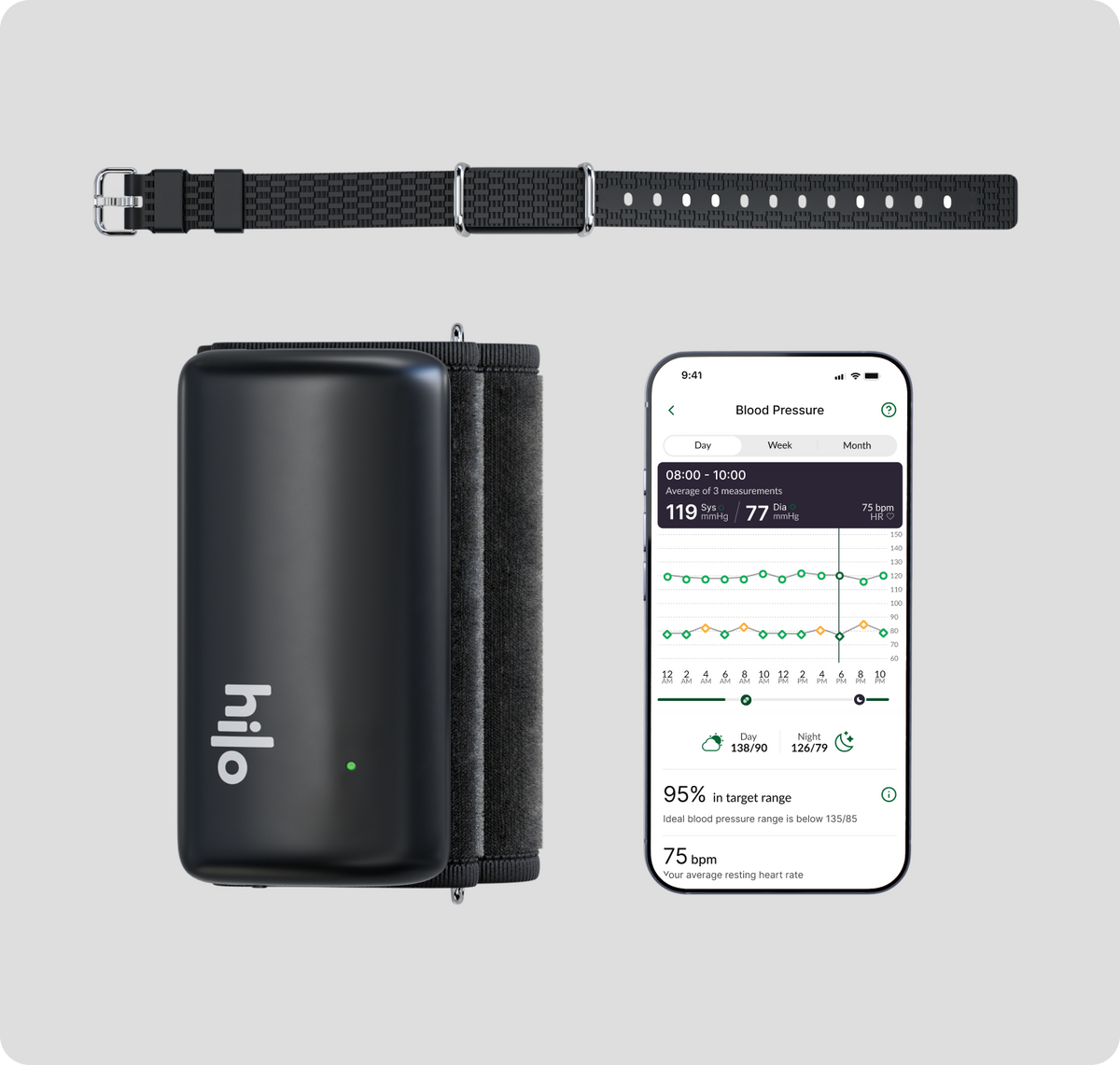
Hilo is a blood pressure tracking system from the health technology company Aktiia. The U.S. offering centers on a lightweight wristband without a screen, a companion smartphone app, and an arm cuff used for setup. Instead of squeezing your arm each time you want a number, the wristband measures in the background throughout the day and night.
The practical difference is the amount of data. A traditional cuff gives you a handful of readings, usually taken at the same few moments, while a wearable can collect far more measurements across a normal day. That can make patterns easier to spot, such as how your numbers change on busy weekdays compared with weekends or how they look overnight.
A good way to think about it is as a tracking tool that adds context, not as a replacement for medical care. It shows trends, and your doctor still decides what those trends mean for your health.
- A wristband, an app, and an arm cuff used for setup
- Measures in the background instead of requiring a cuff squeeze each time
- Collects far more readings than occasional cuff checks
- Best treated as a tracking tool that supports, not replaces, medical advice
How Accurate Is Hilo, and Is It Medically Cleared?
This is the first question almost every new buyer asks, and it is the right one, since blood pressure numbers can influence real health decisions. The company has reported that the system received clearance from the U.S. Food and Drug Administration, and it describes accuracy results from clinical studies on its website. Hilo also says the app will hold back readings when conditions are not good enough to measure reliably, rather than showing a number it cannot trust.
That said, no buyer should rely on marketing claims alone. Read the official accuracy information and the intended-use statement for the exact product you are considering, and remember that regulatory clearance applies to specific uses and conditions. If you have a diagnosed condition, ask your doctor whether a wearable fits into your monitoring plan.
It also helps to compare readings against your cuff during the first few weeks. Seeing how the two line up in your own daily routine builds more confidence than any number on a product page.
- Read the official accuracy and clearance information for your exact model
- The app can withhold readings taken in poor conditions
- Regulatory clearance applies to specific uses, so check the details
- Compare early readings with your cuff to build confidence

Why Does Hilo Come With an Arm Cuff, and How Does Setup Work?
This is where many first-time buyers get tripped up. The wristband estimates blood pressure from optical signals, so it needs to be personalized to you. That is done through a calibration process in which you take cuff readings and the system learns how your wrist signals relate to your actual numbers.
The fix for feeling unsure is to follow the in-app steps exactly. Take the calibration readings when you are seated, calm, and relaxed, with your arm supported at heart level, the same way you would for any proper cuff measurement. Sloppy calibration can affect the quality of everything that comes afterward, so it is worth doing carefully the first time.
Plan to set aside a little time in the first days, and keep the cuff handy afterward. Many users take occasional cuff readings later on as a check, and the app may prompt you if recalibration is needed.
- The wristband is calibrated to you using cuff readings
- Take calibration readings seated, calm, and with your arm supported
- Careful setup improves the quality of later readings
- Keep the cuff handy for occasional checks and recalibration
What Can I Actually See in the App?
The app is where the wristband data becomes useful. Instead of a single number, you can look at averages, daytime and nighttime trends, and how your readings change over days and weeks. Hilo also offers guidance and recommendations inside the app, and the company has described studies in which people who engaged actively with it saw better results over time. Features can change with updates, so check what is currently included.
Practical habits help here. Open the app regularly, look at trends rather than reacting to a single high or low reading, and note anything that might explain a pattern, such as poor sleep, a stressful week, or a change in routine. Those notes become very useful when you talk to your doctor.
If you want to share your data, look at the export and sharing options in the app. A clear summary is far more helpful in an appointment than trying to remember how things have been going.
- View averages, day and night trends, and changes over time
- Look at patterns instead of reacting to one reading
- Note sleep, stress, and routine changes that may explain trends
- Use sharing or export options to prepare for doctor visits
Is It Comfortable to Wear, and What About Battery and Daily Use?
Comfort matters because a tracker only works if you actually wear it. The wristband is designed to be lightweight and to stay on throughout the day and night, and it has no screen, which keeps it simple and less distracting than a smartwatch.
Fit and placement affect measurement quality, so follow the placement guidance in the setup instructions and make sure the strap is snug without being tight. Battery life and charging details depend on the model, so check the current specifications. A simple routine, like charging it while you shower or get ready in the morning, makes it easy to keep up.
If you have sensitive skin or an active lifestyle, look at the available strap options and accessories. A comfortable fit is often the difference between a gadget that sits in a drawer and one you wear every day.
- Lightweight and screenless, so it stays simple for daily wear
- Follow placement guidance for the best measurement quality
- Check current battery and charging details for your model
- Look at strap options if comfort or skin sensitivity is a concern
Who Is Hilo Best For, and Who Should Skip It?
It tends to make the most sense for adults who already want to keep track of their blood pressure and find regular cuff checks hard to stick with. People who are curious about how stress, sleep, or lifestyle changes affect their numbers may also find the continuous view appealing, since it shows what a few daily snapshots can miss.
It may be less suitable for some situations, and the official guidance lists the conditions and users the system is intended for. If you have a heart rhythm condition, are pregnant, or have been given specific monitoring instructions by your doctor, talk to a healthcare professional before relying on any wearable. Hilo's own materials are the best place to confirm who the product is designed for.
The practical takeaway: buy it because you will actually use it. A tracker that fits your routine and keeps you engaged is more valuable than one with impressive specs that you stop wearing after a week.
- Good fit for people who find regular cuff checks hard to maintain
- Useful for seeing how lifestyle changes show up in your numbers
- Check official guidance on intended users before buying
- Talk to your doctor if you have a specific condition or monitoring plan
How Does It Compare With Smartwatches and Home Cuffs?
This trips up a lot of first-time buyers who assume "a wrist device is a wrist device." In reality, the approaches are quite different. Standard home cuffs are a well-established way to take a reading at a specific moment. Smartwatches are great for fitness and heart rate, but many do not provide a regulated blood pressure measurement. A dedicated system like this sits in between, offering ongoing tracking with a cuff-based setup.
Each option has trade-offs. A cuff is simple, familiar, and often more affordable. A wearable adds convenience and many more data points, but it comes with a setup process and an ongoing commitment to wearing it. Many people end up using both, with the cuff as a reference and the wristband for trends.
The smart approach is to decide what you want from the data. If you need an occasional check, a cuff may be enough. If you want to understand patterns across days, nights, and weeks, a continuous tracker is worth a closer look.
- Cuffs are simple and familiar for single-moment readings
- Many smartwatches do not offer regulated blood pressure measurement
- Continuous trackers add trend data but need setup and daily wear
- Many people use a cuff as a reference alongside a wearable
Where's the Safest Place to Buy, and How Do I Avoid Fakes?
Because health gadgets are popular, it is not unusual to run into lookalike websites, unofficial resellers, and social ads promising "blood pressure watches" at suspiciously low prices, and in this category that is often a sign of a product that does not do what it claims. Always make sure you are buying from the official Hilo website or an authorized retailer.
Check that the web address is spelled correctly, that checkout is secure, and that you are paying with a method that offers buyer protection, such as a credit card. Buying from the official source also protects your warranty, support, and access to software updates, which matter for a device that depends on an app.
Be especially wary of any product that claims to measure blood pressure with no calibration, no clearance information, and no company details. When a health reading is involved, a cheap imitation is not a bargain.
- Buy from the official site or an authorized retailer
- Check the web address and confirm checkout is secure
- Official purchases protect warranty, support, and app updates
- Avoid unbranded devices with big claims and no clearance information

Final Thoughts
The questions covered here come up again and again for a reason: choosing a blood pressure tracker for the first time means understanding how calibration works, being realistic about what a wearable can and cannot do, and knowing that the real value comes from watching trends over time. That is the kind of everyday health awareness Hilo is built around.
Armed with these answers, your first steps should feel a lot less like guesswork. Read the official accuracy and intended-use information, plan time for careful setup, and share your results with your doctor.
- Read the official accuracy and intended-use information first
- Take your setup readings carefully and follow the app steps
- Focus on trends over time, not single readings
- Share your data with your doctor and buy only from official sources
Got your answers? See how Hilo works and get started here and take a simpler approach to tracking your blood pressure.